


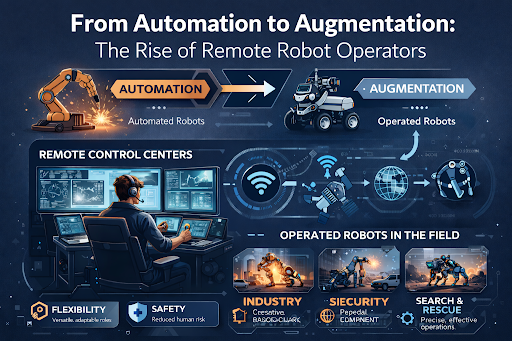
From Automation to Augmentation: The Rise of Remote Robot Operators
Find out how remote operators help control robots, making automation better, more reliable, and easier to scale in real-life situations.
Understanding Remote Robot Operators and Human-in-the-Loop Robotics
Definition and Role of Remote Robot Operators
People who operate robots remotely are trained experts who use specialized tools and networks to do so. Their primary role is to oversee robot operations, intervene when necessary, and ensure tasks are completed safely and efficiently. People can use their skills and knowledge from anywhere with this method.
The Concept of Human-in-the-Loop Robotics
Robots with human help mix automatic systems with human choices for a balanced approach. People who control robots from a distance help by making important decisions, giving real-time advice, making changes, and solving problems that robots can’t handle on their own. This synergy enhances the robustness and adaptability of robotic operations across various sectors.
How Remote Operators Enhance Automation and Flexibility
Organizations can control robots from afar, letting them use automation where fully automatic systems can’t reach. Human-in-the-loop robotics allows for dynamic responses to unpredictable environments, complex tasks, or emergencies. Remote operators can easily change what robots do, fix problems, and make them work better, which helps things run smoothly and cuts down on delays.
The Evolution of Robotics
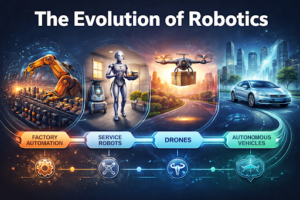
Historical Perspective on Robotics Automation
Robots have come a long way over the years, going from basic machines to advanced systems that can operate on their own. Back in the day, robots were mostly used in factories for tasks that repeated over and over, with fixed programming and not much flexibility. As technology got better, sensors, AI, and connectivity helped create smarter and more independent robots.
Limitations of Fully Autonomous Robots
Despite impressive progress, fully autonomous robots face challenges in complex, unstructured environments. They often struggle with unpredictable variables, nuanced decision-making, and safety-critical situations. It’s crucial to have people keep an eye on things, especially in areas like healthcare, disaster response, and essential services.
The Need for Human Oversight in Complex Environments
Human-in-the-loop robotics can help solve problems in places where things are unpredictable, and safety is really important. People use remote controls to make sure robots work safely and can handle surprises. This approach bridges the gap between automation efficiency and human judgment.
Benefits of Remote Robot Operators in Modern Industries
Improving Reliability and Safety in Critical Operations
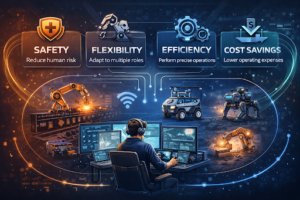
Watching robots from afar makes things a lot safer and more reliable, especially in dangerous places like nuclear plants, chemical factories, or disaster areas. By keeping an eye on the robot fleet all the time, remote operators can spot problems early, avoid accidents, and quickly handle emergencies.
Enhancing Scalability and Operational Efficiency
Using robots remotely helps companies increase their robotic teams without needing people on-site. This scalability lowers costs and allows quick setup at many locations, making better use of resources and boosting productivity.
Enabling Real-Time Decision Making and Problem Solving
Robots working in real-time help make quick decisions, which is really important in urgent situations like surgeries or during disasters. Robots with human assistance solve tough problems quickly by using their own abilities and getting help from people.
Case Studies: Remote Operations in Manufacturing, Healthcare, and Disaster Response
- Manufacturing: Companies utilize robot teleoperation services to oversee assembly lines, perform quality inspections, and manage maintenance remotely, ensuring minimal downtime.
- Healthcare: Remote robotic surgery and telepresence robots enable specialists to perform procedures or consult patients from afar, expanding access to expert care.
- Disaster Response: Robots operated remotely assist in search and rescue missions, navigating hazardous environments where human presence is risky, while remote operators coordinate efforts and analyze data.
Technological Foundations and Challenges of Remote Robot Operation
Key Technologies: Teleoperation, High-Speed Data Transmission, and AI Integration
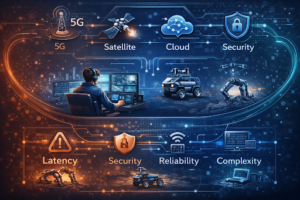
Remote robots work well when you use good systems to control them and get feedback. High-speed data transmission ensures minimal latency, critical for real-time monitoring and control. Using AI makes it easier for robots to work on their own, helps keep an eye on groups of robots, and aids remote operators in handling difficult tasks.
Ensuring Security and Data Privacy
Keeping online work safe from hackers is important because it relies on the internet. Using strong encryption, secure login methods, and regular security checks keeps important data safe and systems running smoothly.
Overcoming Latency and Connectivity Issues
Latency and connectivity disruptions can impair remote robot operations, especially in critical applications. Use edge computing, improve data compression, and create backup communication routes to keep control and monitoring steady.
Training and Skill Development for Remote Operators
To work with robots effectively, people need special training to gain technical skills, be aware of situations, and make good decisions. Keeping up with new skills helps remote workers handle changing technology and challenges.
Future Outlook
Emerging Trends and Innovations
Remote robot operations will get even better with improvements in 5G, AI, and sensors. New technologies like AR and smart systems will help workers improve their efficiency and stay aware of their environment.
Potential for Increased Human-Robot Collaboration
In the future, humans and robots will probably work together more closely. This synergy will expand the scope of robot teleoperation services across industries.
Ethical Considerations and Regulatory Frameworks
As we use remote robots more often, we’ll need to think about privacy, who is responsible, and who makes the decisions. Developing comprehensive regulatory frameworks will ensure responsible deployment and operation.
How Remote Robot Operators Will Shape the Future of Work and Automation
Robot operators working remotely will make automation easier, more adaptable, and safer, changing various industries. People will move from doing the work themselves to overseeing it, allowing humans to guide robots more efficiently and ethically.
Keywords:
Remote Robot – 320 Volume
Robot Operators – 210 Volume
Human-in-the-Loop Robotics – 10 Volume
Evolution of Robotics – 1,300 Volume
Anchor Text: Remote robot operations