


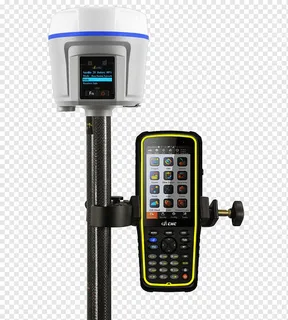
Exploring the Different GNSS Signals and Their Impact on Accuracy
Global Navigation Satellite Systems (GNSS) have revolutionized the way we navigate the world. Whether you’re using a GPS device for hiking, driving, or aviation, GNSS signals are the backbone of modern positioning systems. But not all gnss positioning system signals are created equal. The type of signal, along with other factors like satellite constellations and atmospheric conditions, can impact the accuracy of positioning. In this article, we explore the different GNSS signals and their impact on accuracy, helping you understand how each contributes to the precision of navigation systems.
What are GNSS Signals?
GNSS signals are electromagnetic signals transmitted by satellites in orbit to provide location and time information to receivers on the ground. These signals are used by various navigation systems, including GPS (Global Positioning System), Galileo, GLONASS, and BeiDou. Each of these systems sends out unique signals with varying frequencies, modulations, and error-correction features. Understanding these signals is essential for assessing their impact on accuracy and the reliability of navigation systems.
Types of GNSS Signals
1. L1, L2, L5 Signals (GPS)
The U.S.-owned GPS system provides several frequencies, the most commonly used being L1 (1575.42 MHz), L2 (1227.60 MHz), and L5 (1176.45 MHz). These signals differ in terms of their uses and accuracy:
- L1: The L1 signal is the most widely used and is available in most consumer GPS receivers. However, it is more susceptible to errors like ionospheric delay and multipath effects, which can reduce accuracy.
- L2: The L2 signal is used primarily for military and high-precision applications. Combined with the L1 signal, it allows for the correction of ionospheric errors, significantly improving accuracy.
- L5: The L5 signal is the newest and offers improved performance, especially for high-precision applications. It operates on a frequency that reduces interference from other systems, improving accuracy in difficult environments.
2. E1, E5, E6 Signals (Galileo)
The European Union’s Galileo system also transmits multiple signals, which enhance performance and accuracy in comparison to GPS. The most commonly used Galileo signals are:
- E1: Similar to GPS’s L1, this signal is used for general navigation purposes but has better resistance to interference.
- E5: This signal is part of Galileo’s dual-frequency capability, reducing errors caused by the ionosphere and enabling more accurate positioning.
- E6: The E6 signal is reserved for high-precision applications and can provide more robust and reliable positioning information.
3. L1, L2, L3 Signals (GLONASS)
Russia’s GLONASS system transmits three main signals:
- L1: The L1 signal operates in a frequency range similar to GPS’s L1 signal. While GLONASS is widely used in Russia and neighboring countries, its performance outside this region can be less reliable than GPS or Galileo.
- L2: The L2 signal works alongside L1 and is essential for improving positioning accuracy by compensating for ionospheric delays.
- L3: The L3 signal carries nuclear explosion detection data, but it’s not directly related to navigation and positioning accuracy.
4. B1, B2, B3 Signals (BeiDou)
China’s BeiDou system is rapidly growing in terms of global coverage and is expected to become a significant player in GNSS. The BeiDou system operates on several frequencies:
- B1: Like L1, B1 is the most widely used signal for standard navigation.
- B2: The B2 signal is useful for dual-frequency receivers and helps improve accuracy by mitigating ionospheric effects.
- B3: The B3 signal is designed for high-precision applications and offers robust and reliable positioning in a variety of environments.
Impact of Different GNSS Signals on Accuracy
Signal Frequency and Accuracy
The frequency of a GNSS signal plays a critical role in determining its ability to resist errors. Higher-frequency signals, like L5 or E5, typically provide better accuracy due to their reduced susceptibility to interference. These signals can also mitigate atmospheric errors, such as those caused by the ionosphere, which are more significant at lower frequencies (e.g., L1).
Multipath and Interference
Multipath errors occur when GNSS signals reflect off buildings or other surfaces before reaching the receiver. These signals can cause inaccuracies, especially in urban environments. Using multiple GNSS signals (e.g., combining L1 and L5 for GPS) can help reduce the impact of multipath errors and improve accuracy.
Interference from other radio signals can also affect GNSS performance. Signals like E6 (Galileo) or B3 (BeiDou) are less prone to interference because they operate on less congested frequency bands.
Dual-Frequency and Triple-Frequency Receivers
Modern GNSS receivers that can access dual or triple-frequency signals have a distinct advantage in terms of accuracy. By utilizing multiple signals (such as L1, L2, and L5 for GPS), the receiver can correct for ionospheric errors, significantly enhancing the precision of position data.
Real-Time Corrections
Some GNSS systems, like GPS and Galileo, offer real-time correction signals that can improve positioning accuracy further. For example, the use of the Wide Area Augmentation System (WAAS) or European Geostationary Navigation Overlay Service (EGNOS) can improve GNSS signal accuracy to within a few meters, even in challenging conditions.
Conclusion
In conclusion, the different GNSS signals have a substantial impact on navigation accuracy, with each system offering unique characteristics. From frequency differences to multi-signal capabilities, understanding how these signals affect performance can help users choose the right system for their needs. As GNSS technology continues to evolve, advancements in signal design and the integration of multiple systems will further enhance accuracy, making navigation more reliable than ever before.
